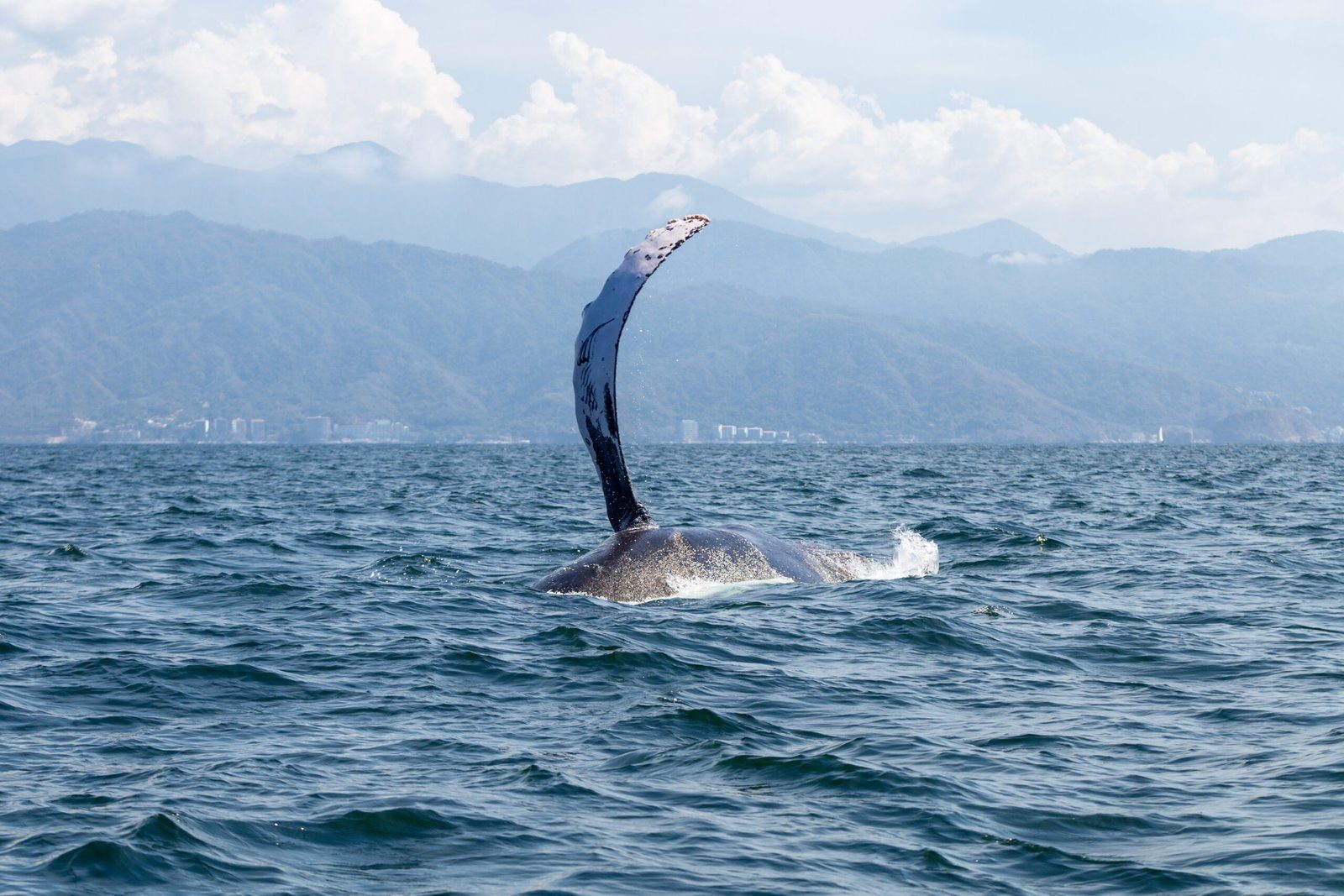
At a glance
- Official 2026-27 season: December 8, 2026 to March 23, 2027, for Jalisco and Nayarit. The dates are the same as last year.
- Photos of the first whales are on social media, but licensed whale watching cannot start before December 8.
- Minimum distance for humpbacks: 60 m for boats under 10 m, 80 m for larger boats. Maximum 4 boats and 30 minutes per whale or group.
- No watching inside 1.5 km of the Marietas Islands, or in a 2 km coastal strip from Punta Mita to the Ameca River.
- Ask to see the boat's permit marker before you leave the dock.
When does whale season start in Puerto Vallarta in 2026-27?
The federal environmental authority signed its 2026-27 notice on October 22, 2026. For Banderas Bay, on both the Jalisco and Nayarit sides, the whale watching season runs from December 8, 2026 to March 23, 2027. That is about 15 weeks.
These are the same dates as last season. If you see March 31 in a quick summary, that date belongs to other states, not to Banderas Bay.
Local press reported on November 11 that the first whale photos on social media were already circulating, weeks before the opening. That is normal for the area, but it does not change the rule: no boat can offer legal whale watching until December 8. Anyone selling you a whale trip earlier is skipping the permit calendar.
Can you see whales in Puerto Vallarta in November? Month by month
This is a general pattern, not a promise for any day. It comes from tourism sources and what we see on the water, not a scientific count.
Late November: the first whales arrive and activity is low. December: numbers grow, with pregnant females and adult males starting to compete, and fewer full jumps. January: the bay gets crowded, with mothers and calves and groups of males chasing one female. February: still peak season, with very high activity. Conanp names January and February as the months of greatest abundance and activity in Banderas Bay.
March: the population drops from early in the month, although mothers with calves can stay until mid-March. Whale watching is allowed until March 23. For the detail on the peak, see our whale watching season guide.
Best time of day for whale watching in Puerto Vallarta
Most tours leave between 8:00 and 10:00 a.m., and the usual advice is to take the first departure. We agree. The reason, calmer water before the afternoon wind, is in our season guide.
There is no open scientific data on whale activity by hour. What we have is local experience. There is a second reason to leave early, explained below: a shorter wait in line.
Mexico whale watching rules (NOM-131): how to know your captain is doing it right
Whale watching in Mexico is governed by NOM-131-SEMARNAT-2010. Here is what it says, in a form you can check from the deck.
Distance: for humpbacks, at least 60 m for boats under 10 m long and 80 m for medium or larger boats. Boats waiting their turn stay 240 m from the whale or group. No more than 4 boats per whale or group, and no more than 30 minutes with each one.
Speed and approach: under 5 knots (9 km/h) in the observation area and under 2 knots (4 km/h) near the whale, never faster than the slowest whale in the group, with no sudden bursts or stops. Moving whales are approached from behind at an angle and followed in parallel. When a whale is still, the engine goes to neutral. Sonar and fish finders may not be used to locate them. If a whale comes close, the engine stays in neutral until it leaves. If whales swim evasively or make longer and longer dives, the boat must move away at once, slowly.
Not allowed: cutting off a whale's path, getting between a mother and her calf, approaching whales that are mating or giving birth, swimming, diving, fishing, jet skis, kayaks, canoes, inflatable rowboats, dinghies and banana boats, feeding the whales, throwing trash, and bringing pets aboard (guide dogs excepted). The norm does not mention drones, so we make no claim about them.
Permit: each authorized boat must carry, in a visible place while it works, the marker issued by the authority. The norm calls it a distintivo and does not describe its color or design, so simply ask to see it and ask for the operator's permit.
Where nobody can watch whales: Marietas and the Punta Mita coast
The 2026-27 notice closes two zones to whale watching because of the concentration of mothers with calves: a 1.5 km radius around the Marietas Islands National Park, and a coastal strip 2 km wide from Punta Mita to the mouth of the Ameca River.
You can visit the islands, but the whale watching happens outside those zones. Any operator who promises whales right at the Marietas, or hugging the beach at Punta Mita, is promising something the notice does not allow.
Why the rules matter this year
A local tourism outlet reported last season as a busy one, with about 5 whales seen per hour against the roughly 2 researchers expect in a regular season. Press reports citing Ecobac add that it also had three collisions. Around February 10, 2026, a calf about two months old was hit by a fast boat near Punta de Mita and died a week later.
Ecobac documented 25 whales struck in the bay from 2007 to 2025. It also says about 300 boats hold a whale watching permit, while around 1,700 more sail the bay for other purposes, usually without whale protocols. Those figures are from last season, and we do not have the 2026-27 permit count.
None of this means staying ashore. The captain's slow speed, the distances and the permit are not paperwork. They are the reason the show keeps happening.
Private whale watching tour or big boat: what the rules change
Look at it from the rulebook, not from comfort. With only 4 boats allowed per whale and 30 minutes each, the rest wait in line.
A smaller boat that leaves early usually has a shorter wait in that line, and it can follow the whales at your pace instead of a fixed route. That is a practical edge, not a guarantee. Sightings depend on the day, and no honest operator guarantees them.
Our private whale watching tour is 4 hours, for ages 6 and up. A private panga starts at $329 USD for the boat, with 4 people and 4 hours included and up to 8 aboard. It goes to the north side of the bay, and it only covers whale watching unless you ask to add other stops. The other differences between big and private boats are in our season guide.
Sources
- SEMARNAT, Aviso de temporada 2026-2027 de observación de ballenas (DOF, vía SIDOF)(Consulted November 18, 2026)
- SEMARNAT, Aviso de temporada 2025-2026 (DOF, vía SIDOF)(Consulted November 18, 2026)
- Diario Oficial de la Federación, NOM-131-SEMARNAT-2010(Consulted November 18, 2026)
- Tribuna de la Bahía, primeras ballenas de la temporada(Consulted November 18, 2026)
- Azteca Jalisco, fechas de la temporada 2026-2027(Consulted November 18, 2026)
- Milenio, datos de Ecobac sobre colisiones y embarcaciones(Consulted November 18, 2026)
- Pasillo Turístico, balance de la temporada 2025-26(Consulted November 18, 2026)
- Hard Rock Hotel Vallarta, blog sobre cuándo ir a ver ballenas(Consulted November 18, 2026)
